.png)
Passive candidates vs. active candidates: Why the best recruiters use both
Should recruiters spend more time sourcing passive candidates or focus on the active candidates already applying for jobs?
It's a common question—but it's becoming the wrong one.
Today's recruiting teams face a much bigger challenge than choosing between two candidate pools. They're expected to identify scarce skills, build long-term talent pipelines, improve hiring speed, and support workforce planning—all while managing increasing requisition loads.
As Josh Bersin explains in Research Shows It's Time to Reinvent Talent Acquisition, recruiting has evolved from a transactional hiring function into a strategic business capability. His research found that 58% of organizations say skills shortages are significantly impacting business performance, while more than three-quarters believe they need to transform their talent practices to support future growth.
In that environment, relying exclusively on active applicants—or spending all your time manually sourcing passive candidates—is no longer enough.
The strongest recruiting teams don't choose one strategy over the other.
They build sourcing processes that consistently uncover the best talent, wherever it exists.
What are active candidates?
Active candidates are professionals who are actively searching for a new opportunity.
They're applying for jobs, updating resumes, responding to recruiter outreach, and engaging with career sites or job boards.
Because they're already in the market, active candidates often move through the hiring process more quickly.
Benefits of active candidates
- Faster hiring timelines
- High engagement
- Easier to identify through career sites and job boards
- Lower sourcing effort
Challenges with active candidates
Active candidates represent only one portion of the available talent market.
Organizations relying exclusively on inbound applications often compete with dozens—or even hundreds—of employers targeting the same professionals.
Successful recruiters build talent pipelines using multiple sourcing channels rather than depending solely on applicants who come to them.
What are passive candidates?
Passive candidates are professionals who aren't actively searching for a new role but may consider the right opportunity if approached thoughtfully.
One of the biggest misconceptions in recruiting is that passive candidates aren't interested in changing jobs.
More often, they're simply focused on their current role until something compelling captures their attention.
When recruiters invest in personalized outreach and relationship building, passive candidates can become some of the strongest additions to a hiring pipeline.
Benefits of passive candidates
- Broader access to qualified talent
- Specialized experience and skills
- Less competition during the hiring process
- Stronger long-term talent pipelines
Challenges with passive candidates
Passive candidate sourcing requires more proactive effort.
Recruiters need to identify candidates, personalize outreach, and build relationships over time.
Without modern sourcing tools, that process becomes increasingly difficult to scale.
How talent intelligence changes the equation
The question isn't whether recruiters should source passive candidates or active candidates.
The question is how they can identify the best talent—regardless of where candidates are in their career journey.
This is where talent intelligence and AI candidate matching make a difference.
Rather than relying primarily on keyword searches, AI evaluates multiple signals, including:
- Skills
- Career progression
- Experience
- Education
- Certifications
- Role history
This gives recruiters a broader, more accurate picture of candidate fit while reducing manual sourcing.
As Bersin notes, organizations investing in talent intelligence and modern recruiting technology are giving recruiters more time to focus on high-value work—building relationships, advising hiring managers, and making stronger hiring decisions.
How Nebula helps recruiters build stronger talent pipelines
Nebula combines AI-powered candidate matching with intelligent candidate sourcing to help recruiting teams discover qualified talent more efficiently.
Expand candidate discovery
Nebula searches across more than 200 million candidate profiles in reach, helping recruiters identify qualified professionals beyond traditional sourcing channels.
Prioritize stronger matches
Rather than relying solely on keywords, Nebula evaluates skills, experience, career progression, and other contextual signals to surface candidates most likely to succeed.
Reduce manual sourcing
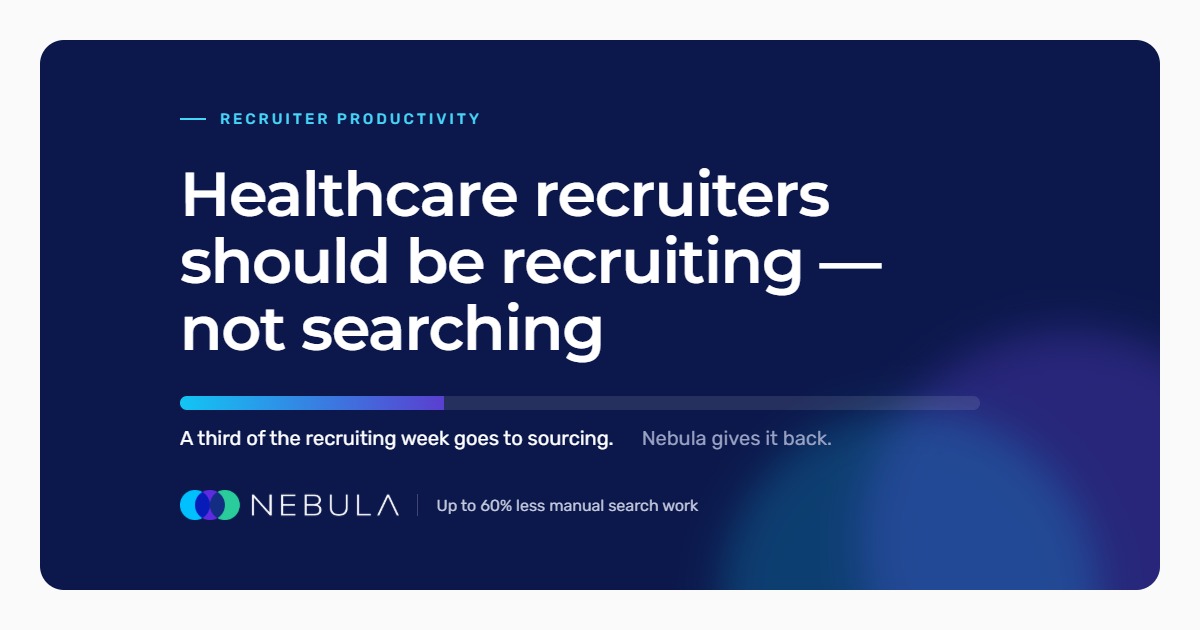
Nebula customers report up to 60% less manual search work, allowing recruiters to spend more time engaging candidates instead of searching for them.
Work inside your ATS
Nebula integrates directly into existing ATS workflows, allowing recruiters to improve candidate discovery without changing how they already work.
The future of recruiting isn't passive or active—it's intelligent
Recruiting isn't becoming more successful because recruiters are choosing passive candidates over active candidates.
It's becoming more successful because organizations are adopting more strategic approaches to discovering, evaluating, and engaging talent.
Active candidates provide speed.
Passive candidates expand opportunity.
Talent intelligence helps recruiters make the most of both.
As recruiting continues to evolve from a transactional function to a strategic business capability, the teams that consistently outperform won't simply source more candidates—they'll identify the right candidates faster and spend more time building the relationships that lead to successful hires.
.png)